

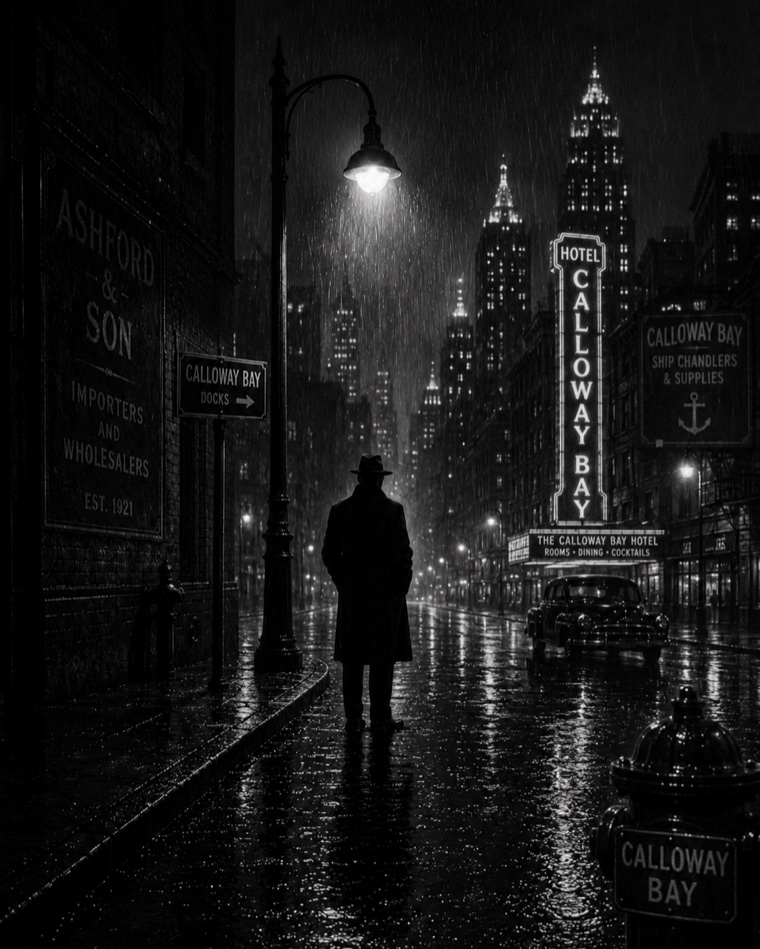
The Case Files
Every case stands alone. Start anywhere — the world remembers what you missed.
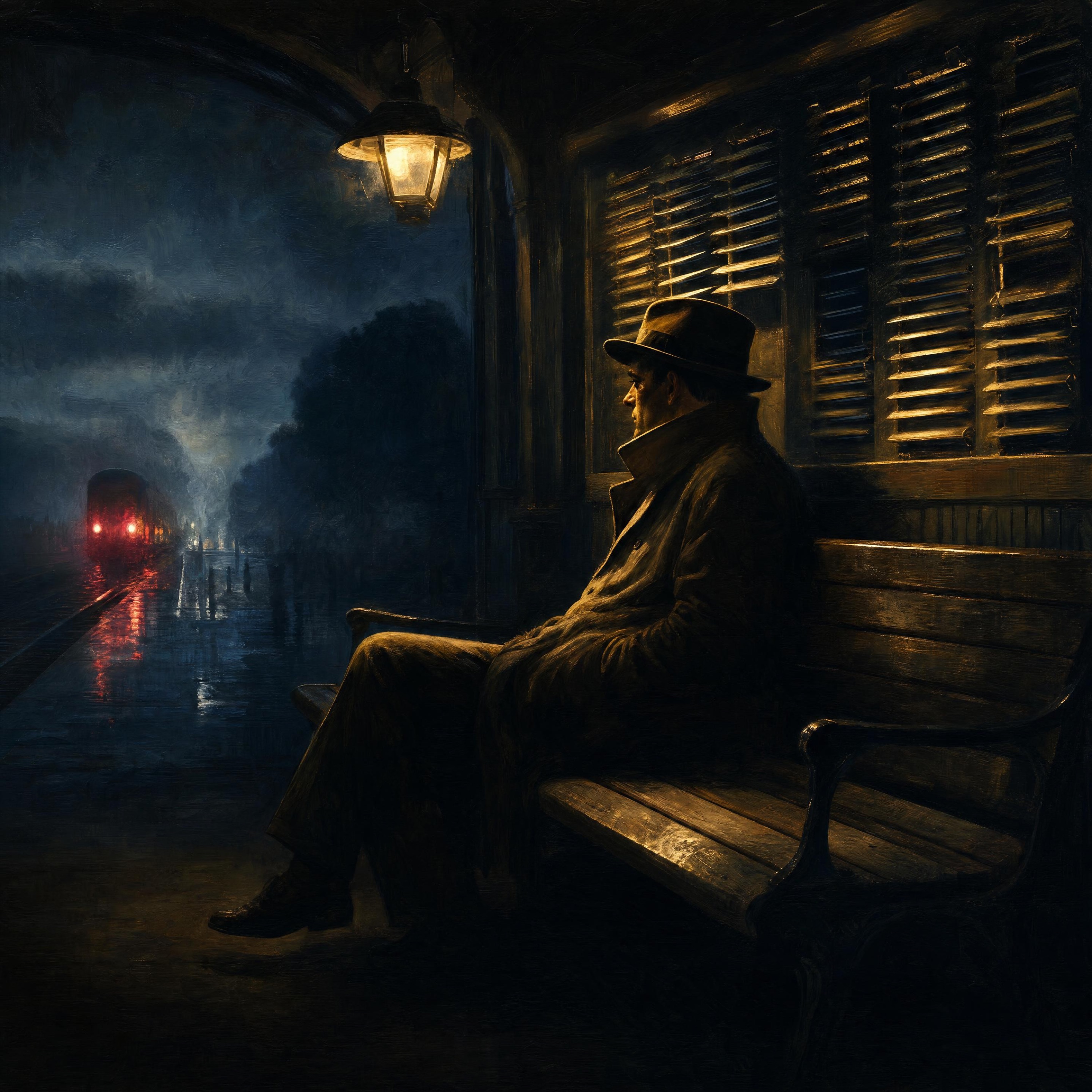
Five-Ten Out of Calloway Bay
The clock reads a few hours to the 5:10 and Walter takes a bench facing the door, watching for a man he's sure is coming.
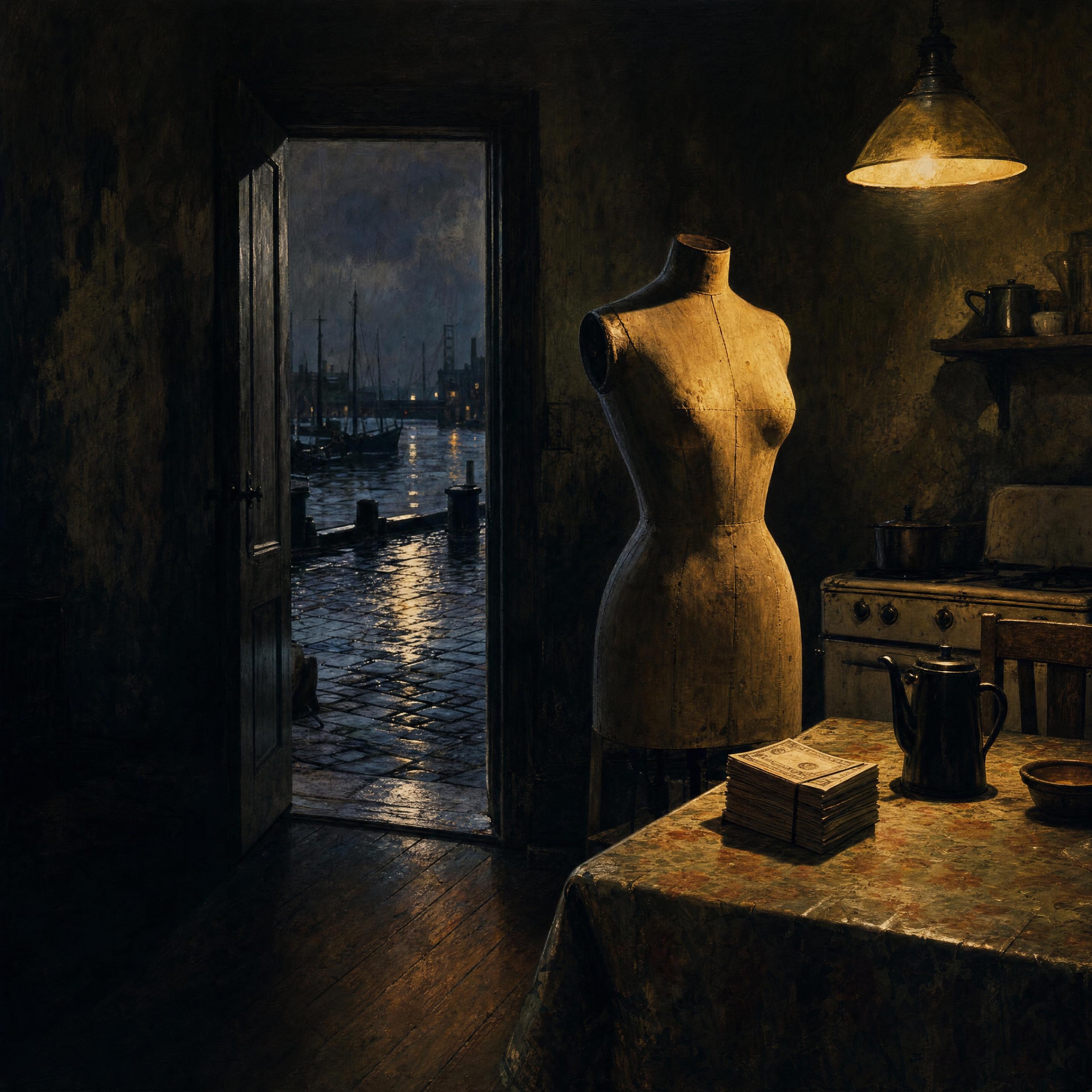
The detective takes the trace and starts the walk down to the dressmaking flat where a stranger stopped breathing.
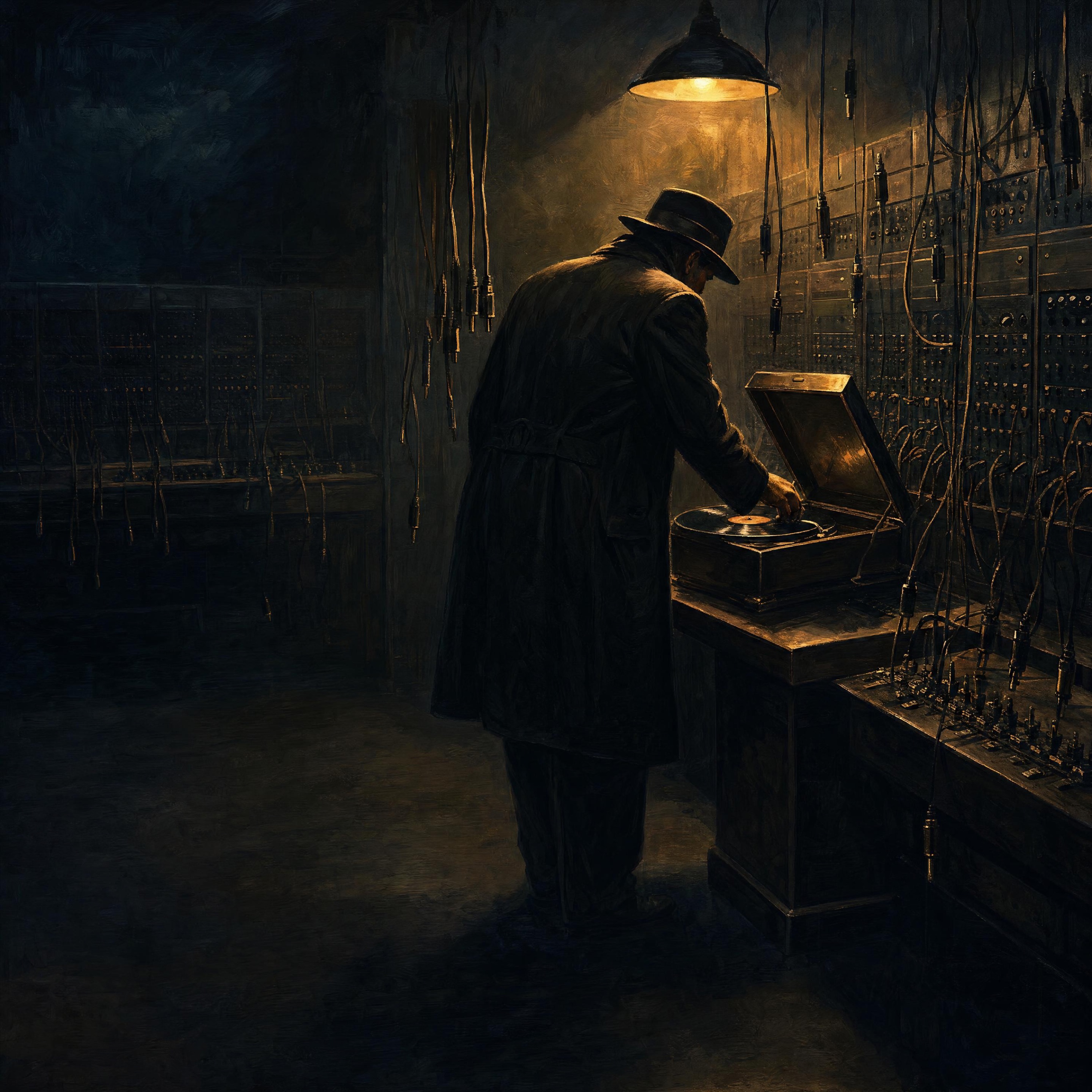
She presses a wax disc into his hand — the one shift the charity's men were too quick to collect, the record of the night her sister died at the board.
The one un-smiling face in the room is the detective's own, and he says a story like this plays like a happy ending only if you never run it backward — so he's going to run it backward.
Crandall pays his day rate to find Renner's killer and hands him a ledger closed to the exact page it was open on when the man died over it.
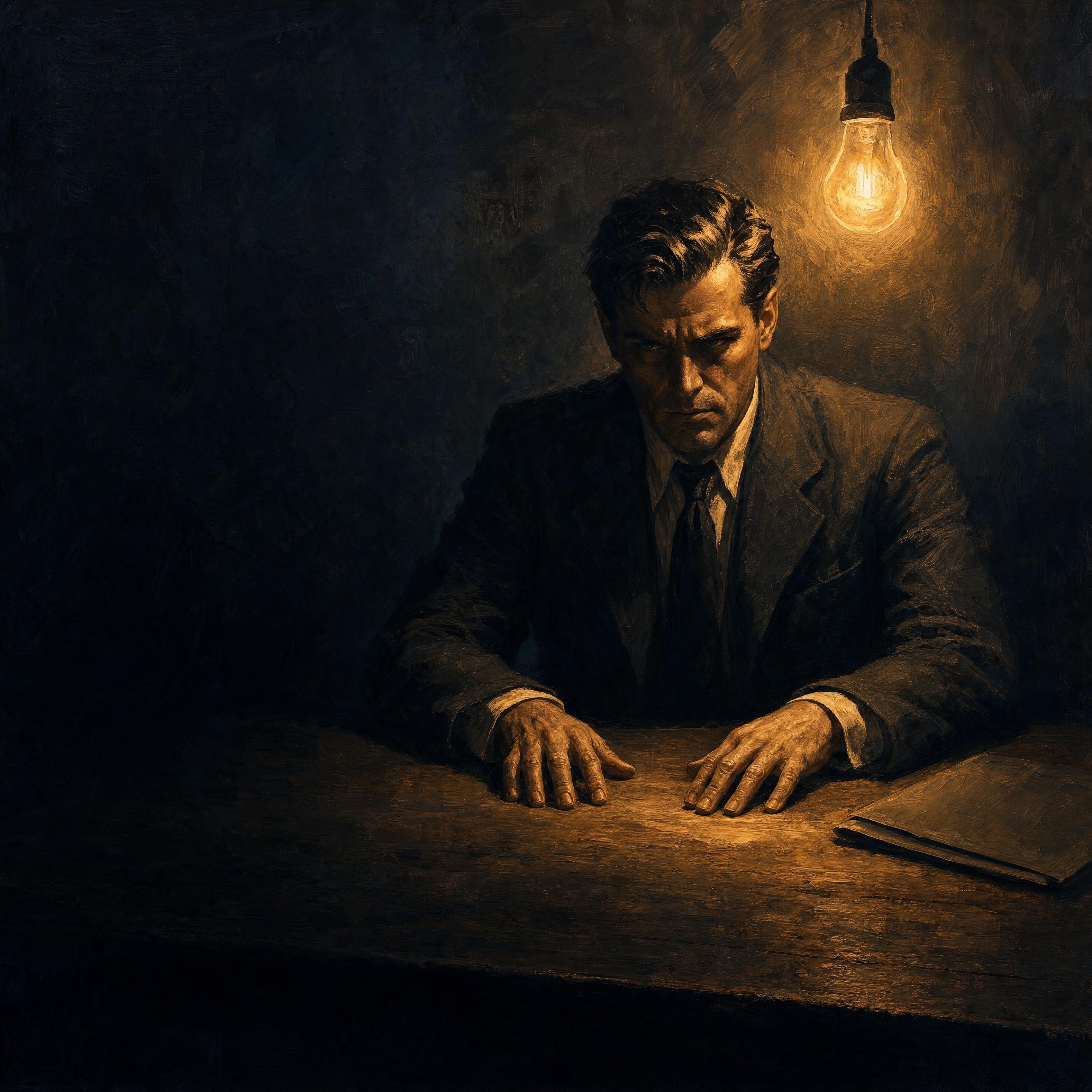
The nameless witness is sworn; the board turns to what he knows about the man seeking to be made new.
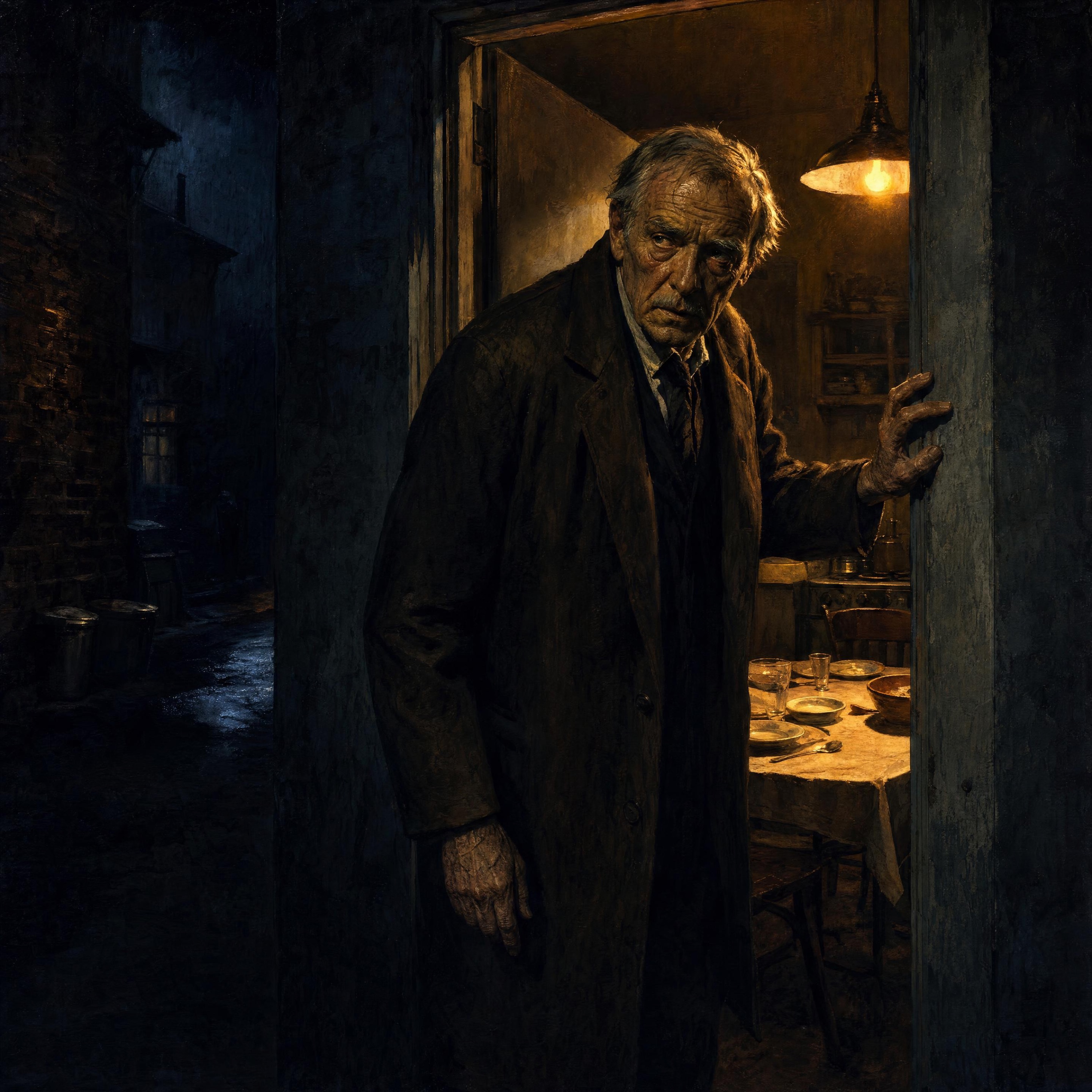
He takes the boarding-house address expecting to sign off a formality and be home by dark.
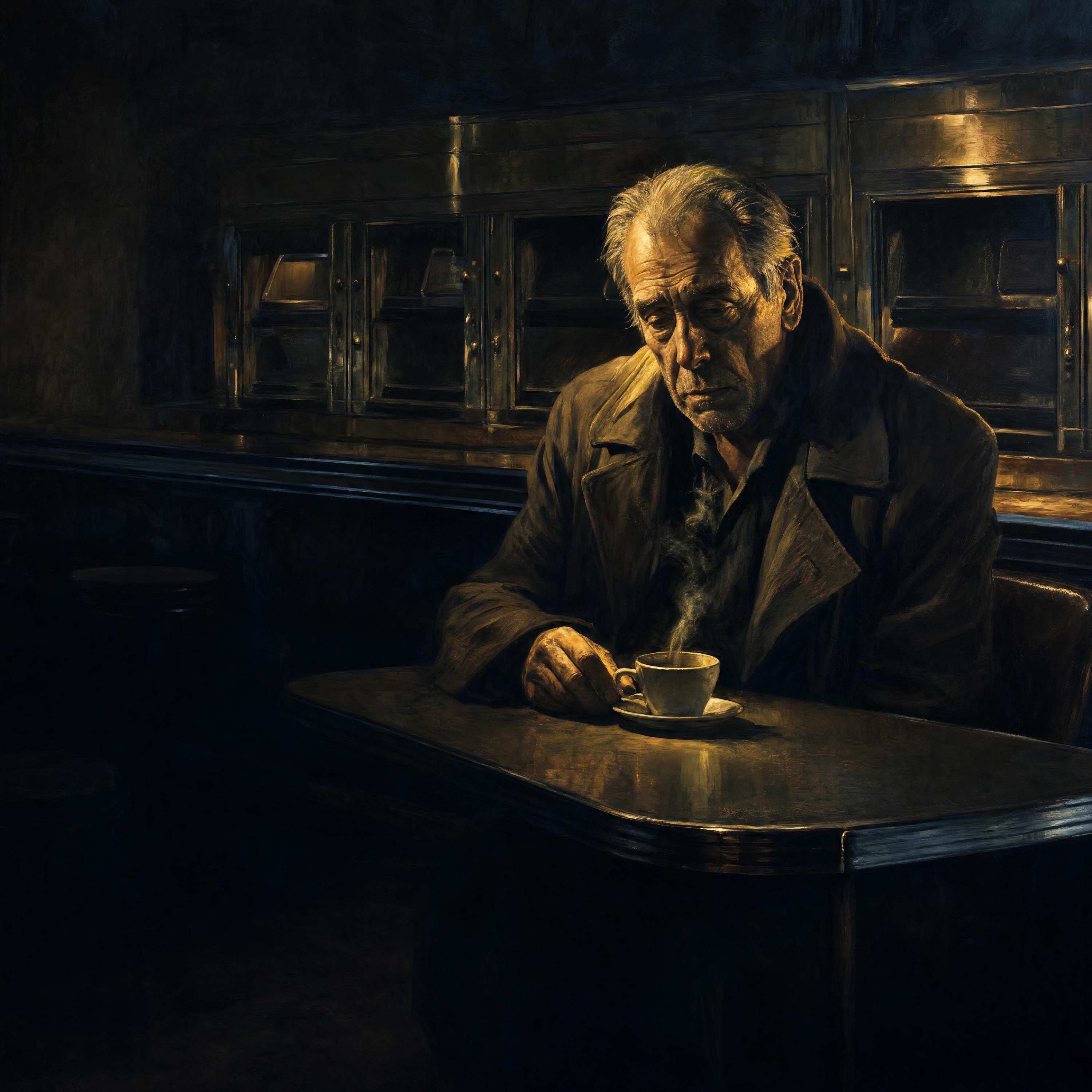
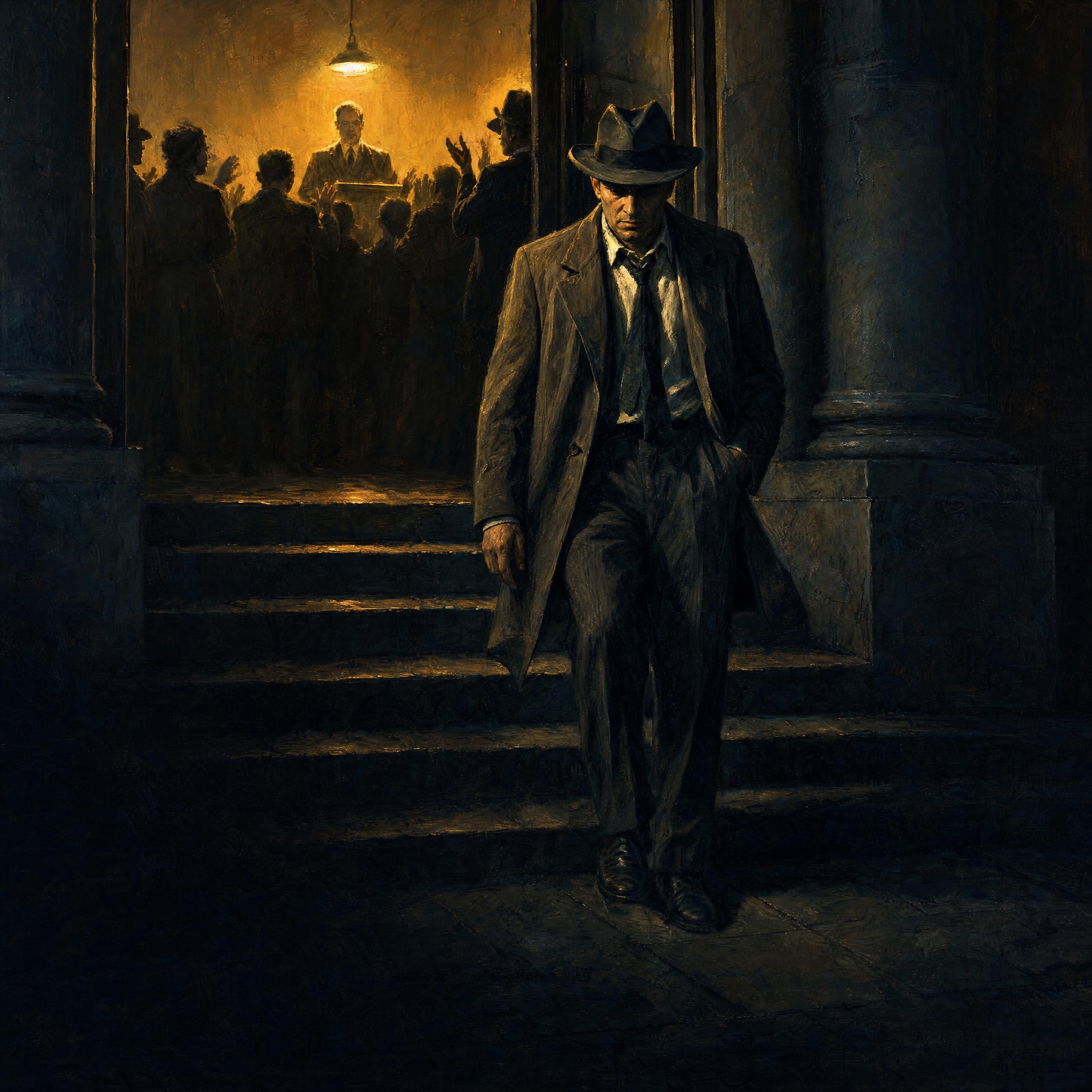
Tobin says the words that let Sowell off every hook there is — no marker, no penance, nothing owed — and the detective, who came here to close a case, realizes he can't name what he just watched or why it undoes him.
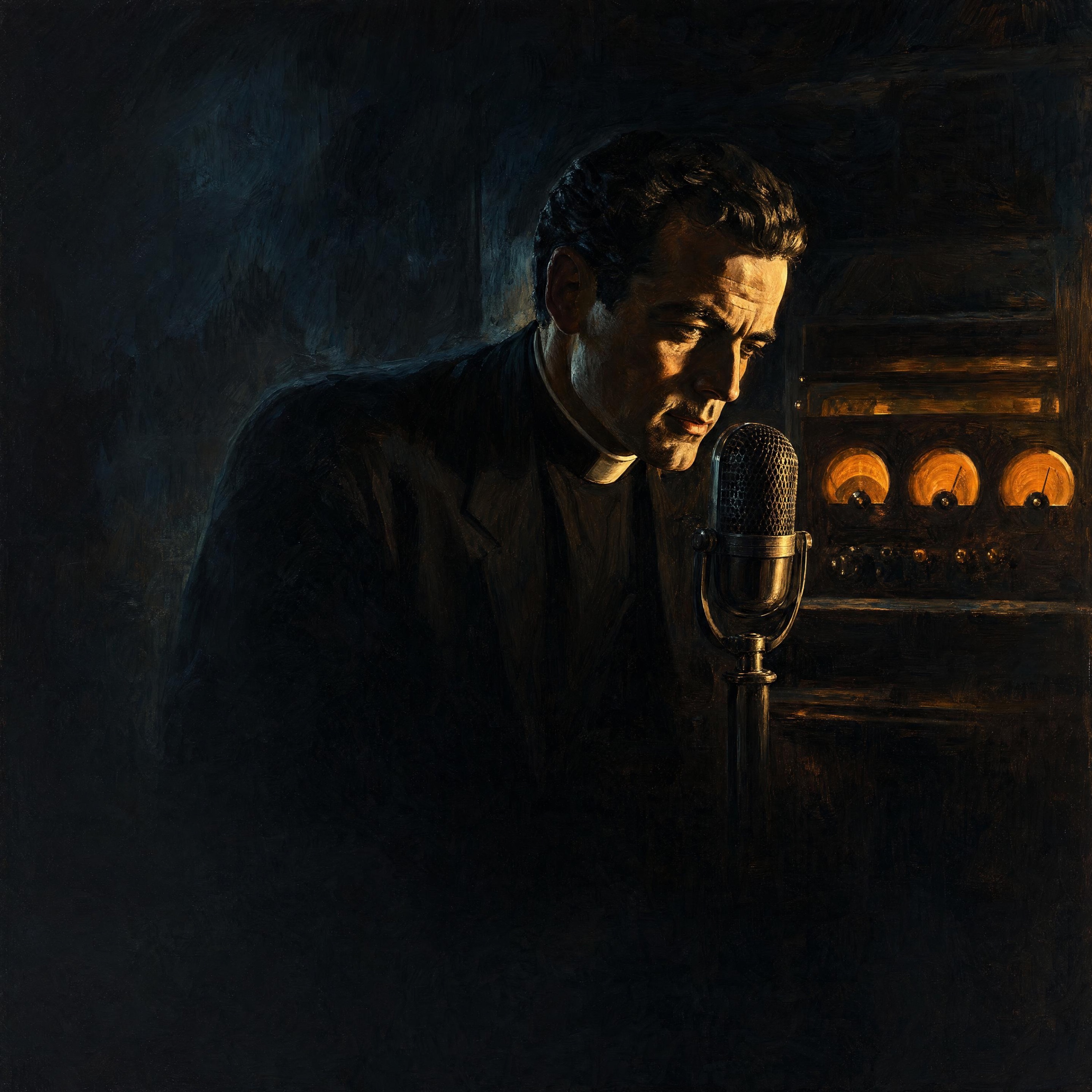
She swears the voice absolving strangers on the air is the man who killed her husband, and the detective, telling this from the far side of it, already knows he has nothing but a voice to hang a dead man with.
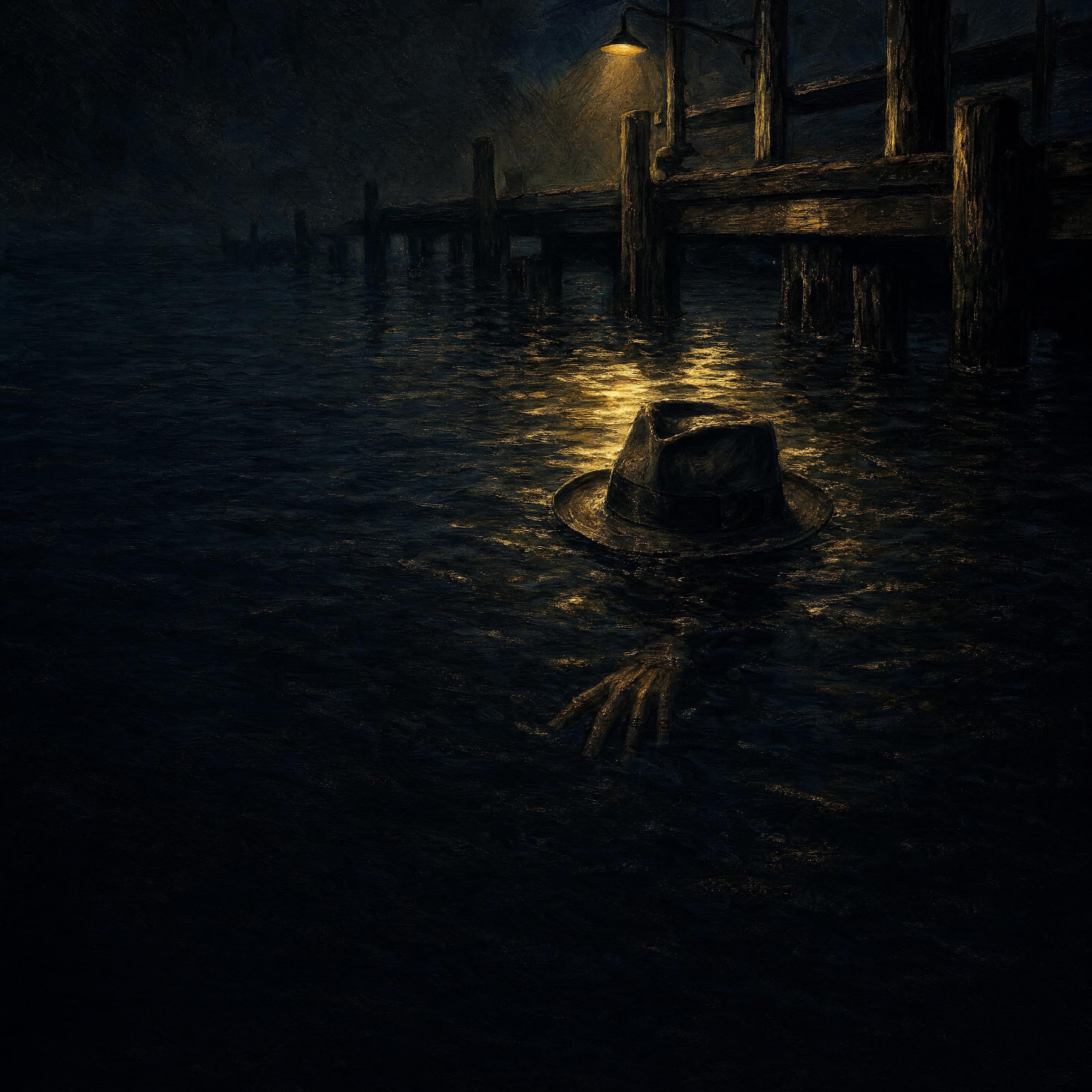
A woman at the back who never applauds is gone before the handshake, and Cole's thanks land a half-beat too smooth, a wrongness the detective can't place under all that warmth.
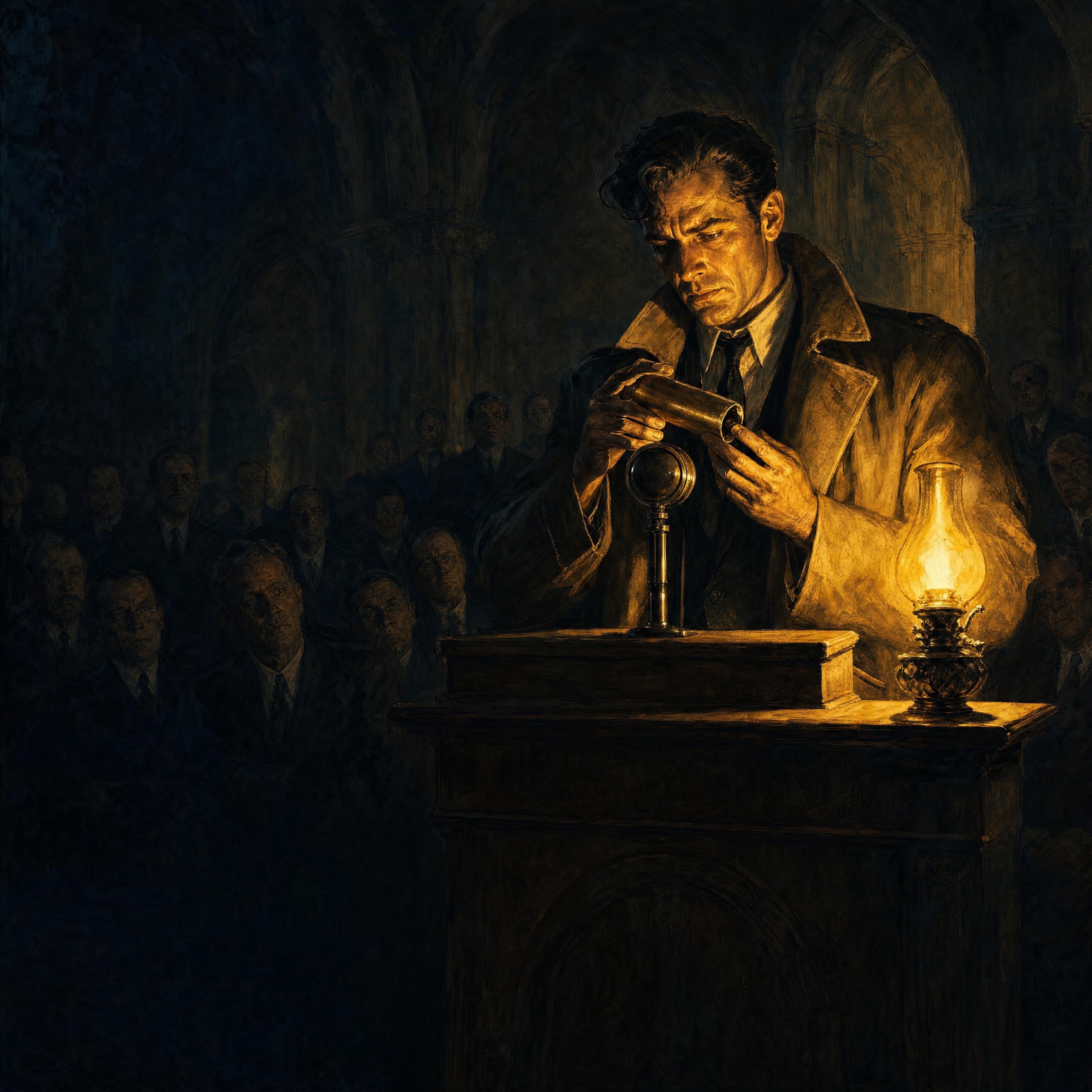
The master of ceremonies announces the dead man left a testament in his own voice to be played tonight, and the detective feels the weight of the second cylinder, the true one, against his ribs.
Brogan asks him to hold one old man's gate call before the morning shape — and holding it means walking into the machine that finally has his face.

She can't pay much and she isn't hiding anything — she came because she heard he's the one who does the honest thing, and the only thing she knows for certain is that her sister never climbed those stairs alone.
He takes a case he can't be paid for and knows the girl walked in already half-decided.
The card is stamped fraud, and the only clerk who'll touch it is the examiner who read him line by line.
A city license examiner is due at noon to review his permit, and a woman is already waiting past Dale, sent by the reporter, who has telephoned twice.
She lays a carbon copy of a file on the blotter she was ordered to feed the furnace, and says the man who gave the order is counting the ashes tonight.
The woman in the waiting room asked Dale which old cases the detective still kept files on — and smiled when Dale wouldn't say.
He's holding a city order that points straight back into the territory the machine warned him out of.
A hand-delivered card invites the detective to the Blue Room — and Dale points out the thing he already knows: in twenty years Marchetti has never once asked first.
The date she gives for when her man walked out and didn't come back is the day Flynn walked a frightened stranger down the courthouse steps at noon.
The envelope holds no money and no name — only a time, a place, and the line 'you said eyes open,' and the detective knows which debt just woke up.
A name the detective hoped he'd buried surfaces on a clerk's transfer list — and a name on that list has days, not weeks.
She leaves a photograph and a held-back grief; Flynn sees the face of a man who packed before he left, not one who was taken.
The workday she circled in his pocket diary is the day before he died, and the figures he wrote beside it don't add up to anything yet.
The man Marchetti describes fits the one man Flynn hoped he'd never be asked about.
The secretary slides a calling card across the desk — a name the detective thought the city had finished burying — and says the woman is already in the hall.
The morning Chronicle carries an appointment notice with a name the detective knows, and he reads in it the answer to a silence he's been waiting on for two cases.
There's a woman who won't give a name, only that it's about a name — and she's been waiting since before the office opened.
He's decided to do the one thing he's refused for years, and won't say what it is — only that he's done waiting for his name to come up.
Brogan has a name and a sit-down set for tomorrow night, and he wants the detective standing next to him when he pulls it.
A kid found Frankie Slim under the el at low tide, but it's the way he was killed that's wrong: too clean, too quiet, no message left for anybody. Frankie was a man who heard everything; he never heard this coming.
The hunters already knew where the witness slept last night; someone is a step ahead of the detective, and the only people who knew his moves are on his own payroll.
A woman who won't give a name but knows his says she'll be at a place at midnight, and if he doesn't come she's already dead.
She slides a brass key across the desk and says it opens a drawer belonging to the most respectable man in Calloway Bay.
She swears her man was clean and never took a dive in his life, so why was he found dead in his corner the morning after he wouldn't go down?
She slides a creased photograph across the desk — a girl's face from twenty years back — and the detective realizes he's seen those eyes somewhere he can't place.
There's a fresh body across town, killed with the detective's own gun, and the police are already on the stairs.
The only proof died in the harbor, unless somewhere there's a copy of the D.A.'s ledger.
A snitch coughs up the name Marchetti, then bolts for the door.
No aired case ends unresolved. The clerk checked twice and says the drawer is empty.